Facial averageness: an evidence-based guide
Why faces close to the population average are rated attractive, and why that is not the same as being plain.
By Faciem research · 2026-09-12 · 6 min read
The finding
Since Langlois and Roggman (1990), composite faces made by averaging many faces have been rated as more attractive than most of the individual faces they were made from. The effect replicates across cultures.
Why it happens
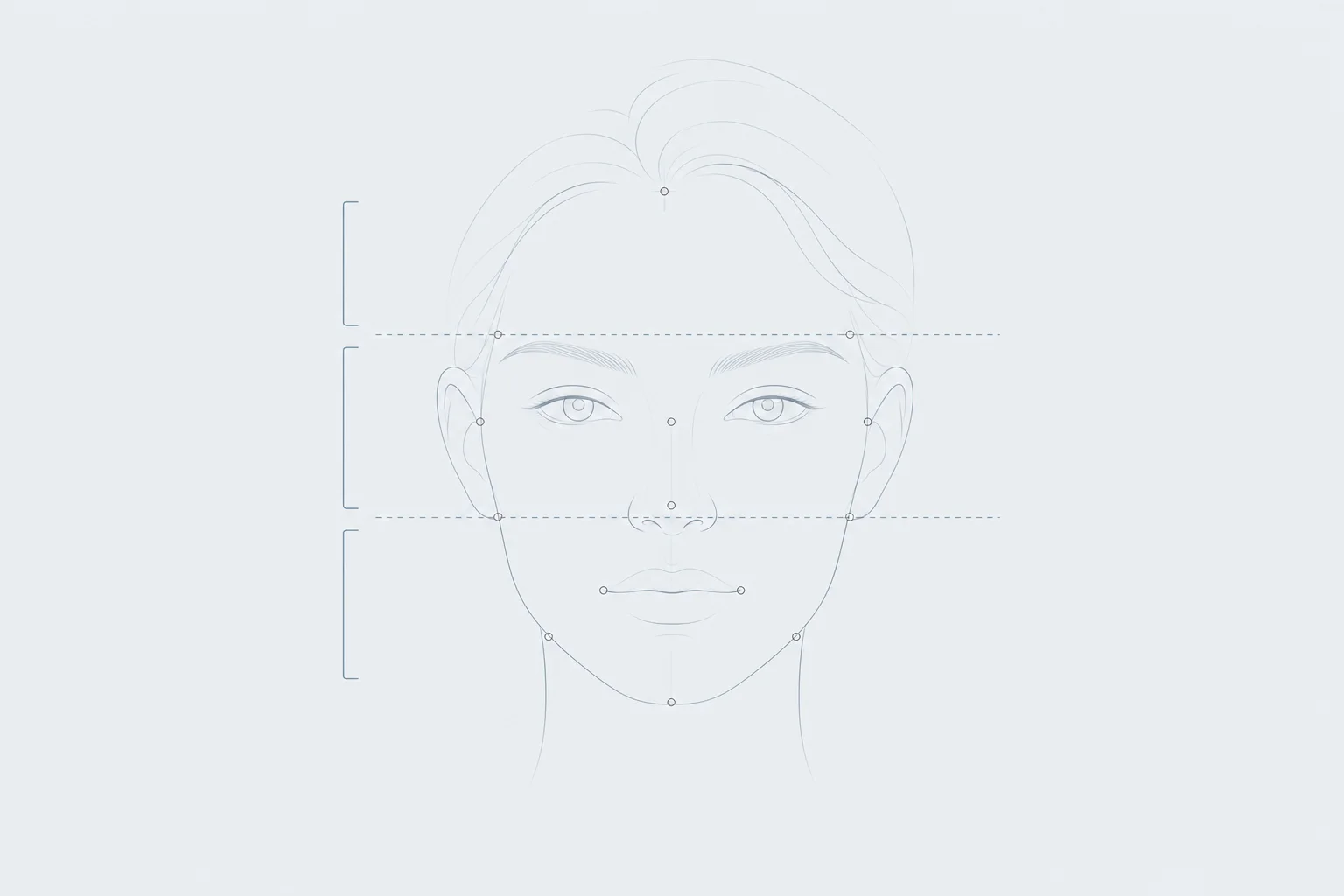
Average faces are easy to process, have typical proportions, and lack the small irregularities that signal developmental stress. They are not bland: the most attractive faces are average in structure and distinctive in a few features.
How we use it
Your report compares each measurement with the average of people like you. Features far from the mean are flagged, but only when the literature says that distance matters. Many deviations from average are neutral or even attractive, and we say which.

attraction science · 7 min read
Facial symmetry: an evidence-based guide
What symmetry is, how it is measured, why it matters less than people think, and what actually moves it.

attraction science · 8 min read
Facial dimorphism: an evidence-based guide
Masculine and feminine facial traits, what they signal, and why balance beats extremes.